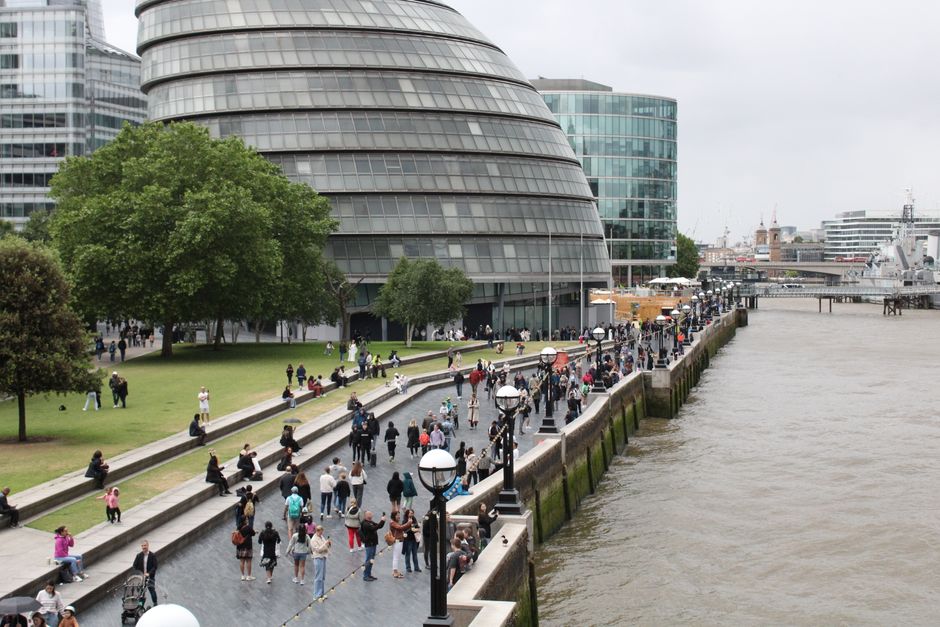
Access problems on Victoria Embankment rubbish pickups solved
If you have ever tried to organise rubbish pickups along Victoria Embankment, you will know the issue is rarely the waste itself. It is the access. Tight timing windows, traffic, loading restrictions, pedestrians, weather, and the simple fact that the riverfront never stands still can turn a straightforward pickup into a small logistical puzzle. This guide explains how Access problems on Victoria Embankment rubbish pickups solved can be approached properly, so collections happen with less stress, less delay, and fewer costly mistakes.
Whether you are clearing office waste, household items, builders' rubble, or bulky furniture, the best results come from planning around the street, not against it. That is the real shift. In practice, it means matching the right vehicle, the right timing, and the right preparation to a location that is busy, visible, and not exactly forgiving. Let's break it down in plain English.
Table of Contents
- Why access problems on Victoria Embankment rubbish pickups solved matters
- How access problems on Victoria Embankment rubbish pickups solved works
- Key benefits and practical advantages
- Who this is for and when it makes sense
- Step-by-step guidance
- Expert tips for better results
- Common mistakes to avoid
- Tools, resources and recommendations
- Law, compliance, standards, or best practice
- Options, methods, or comparison table
- Case study or real-world example
- Practical checklist
- Conclusion
- Frequently asked questions
Why Access problems on Victoria Embankment rubbish pickups solved Matters
Victoria Embankment is not a quiet side street where a van can pull up, load, and disappear in five minutes. It is a major central London route with constant movement, limited stopping opportunities, and a layout that can make even a small pickup awkward. That matters because access problems do not just slow collections down; they can increase labour time, create parking headaches, and lead to missed pickups altogether.
When access is poor, rubbish tends to sit around longer than it should. On commercial sites, that can affect staff working space and presentation. In residential settings, it can mean clutter in hallways, stairwells, or loading areas. And if you are handling bulky waste, the delay can get messy quickly. Bag by bag is one thing. A broken wardrobe or builders' waste? Entirely another matter.
There is also a safety angle. Poor access often means more carrying distance, more awkward lifting, and more opportunities for items to block walkways. That can be a nuisance, yes, but it can also create avoidable risk for residents, workers, and the public. Good access planning is not just convenient. It is sensible.
Key takeaway: on Victoria Embankment, rubbish pickup success depends less on brute force and more on timing, route planning, and realistic site preparation.
How Access problems on Victoria Embankment rubbish pickups solved Works
The solution usually starts before the collection vehicle arrives. A proper access-led pickup plan looks at where waste is stored, how far it needs to be moved, whether there is safe stopping space, and what restrictions may apply on the day. In other words, the collection is designed around the site layout rather than trying to improvise at the kerb.
In a Victoria Embankment setting, that often means checking for the following:
- loading or waiting restrictions near the pickup point
- traffic flow and peak-time congestion
- limited kerbside stopping space
- pedestrian access and public safety concerns
- building access issues such as narrow doors, lifts, steps, or shared entrances
- the type, size, and volume of waste to be removed
From there, the collection method can be matched to the reality on the ground. A small van may work well for quick waste removal where space is tight. A two-person team may be better than one person if items are heavy or bulky. For commercial clearances, breaking the load into smaller, controlled movements often works better than trying to do everything in one dramatic sweep. Truth be told, the dramatic sweep usually ends badly anyway.
If the waste is mixed, sorting it into clear categories before collection can save time at the kerb. This is especially useful for items such as office furniture, packaging, general rubbish, and construction debris. If you are dealing with a wider property clearance, the right service page can help frame the task properly, such as office clearance, furniture disposal, or builders waste clearance.
Key Benefits and Practical Advantages
Getting access sorted properly is not just about avoiding hassle. There are a few very practical wins.
- Faster collections: less standing around waiting for access to clear or for someone to find the right key, code, or contact.
- Lower labour pressure: short carrying distances and safer loading conditions reduce strain on the team.
- Fewer disruptions: tidy pickups are less likely to interfere with tenants, employees, visitors, or neighbours.
- Better vehicle choice: access conditions help determine whether a compact van, larger vehicle, or two-person crew is the sensible option.
- Improved cost control: when access is clear, collections are more likely to stay on schedule and within the original plan.
There is also a confidence benefit, which sounds soft but really is not. When you know the access plan is sorted, the whole job feels calmer. The site team is not second-guessing every move, and the collection does not start with that familiar little panic of, "Where exactly can they park?"
For customers comparing services, this is where a clear pricing structure and good communication matter. It helps to review a provider's pricing and quotes approach alongside its practical waste handling methods. If sustainability matters to your business or household, it is also worth looking at recycling and sustainability so you know items are handled responsibly where possible.
Who This Is For and When It Makes Sense
This kind of access planning is relevant for more people than you might expect. It is not just for large commercial clearances. In fact, smaller jobs often run into access problems because people assume they will be easy. Then the lift is too small, the service entrance is locked, or there is nowhere legal to stop. Simple job, complicated day.
You will likely need this approach if you are:
- a business managing office waste or a change of tenancy
- a landlord or managing agent arranging a flat clearance
- a homeowner clearing bulky items or mixed household rubbish
- a contractor removing construction offcuts or renovation debris
- a hospitality or retail operator needing fast, low-disruption waste removal
- someone dealing with loft, garage, or garden clearances where access is awkward
For residential situations, services such as flat clearance, home clearance, loft clearance, and garage clearance are often the most relevant starting points. For outdoor or mixed-use sites, garden clearance can be useful too.
If you are a business with routine collections, it may also be worth checking whether business waste removal is a better fit than a one-off pickup. The difference is often about regularity, access predictability, and how much waste builds up between visits.
Step-by-Step Guidance
Here is the practical version. No fluff, just the sequence that tends to work.
- Map the access point. Identify the closest safe loading position, entrance, lift, gate, or service route. If the pickup point is a long walk from the waste, say so early.
- List the obstacles. Note stairs, narrow corridors, low ceilings, timed access, security desks, and any likely pinch points.
- Separate the waste. Keep furniture, general rubbish, scrap, and builders' waste apart where possible. It reduces confusion and speeds the load.
- Confirm vehicle suitability. Ask whether a smaller vehicle, larger van, or team lift is more realistic for the location.
- Check timing carefully. Early morning can be quieter in some places, but not always. The point is to work with the local flow, not against it.
- Prepare the route. Move obstacles, unlock access points, and make sure anyone with keys or permits is reachable on the day.
- Keep communication simple. One contact, one instruction set, one clear collection location. Fancy systems are great until nobody can find the right person.
- Build in a backup plan. If kerbside access is blocked, know where the collection can pause safely without causing a nuisance.
A quick example: if a team is collecting office chairs and broken desks from a building near the Embankment, it may be far smarter to arrange a short window when the service route is clear and the lift is reserved, rather than trying to squeeze the pickup into a busy lunch period. That small decision can save an entire afternoon.
Expert Tips for Better Results
In our experience, the smoothest pickups are rarely the ones with the fewest items. They are the ones where the access details were thought through early.
- Measure doorways and corridors properly. Guessing is not a strategy. It is a hopeful mood.
- Photograph awkward access points. A few quick images often explain more than a long email.
- Use labelled stacks. Even simple labels like "keep", "load first", and "fragile" make a surprising difference.
- Avoid peak traffic where possible. On central London roads, ten minutes can change the whole feel of a job.
- Make the route obvious. If items have to pass through a shared hallway, keep it clear and tell occupants what is happening.
- Check if manual handling will be needed. Heavy or awkward items may require more than one person and the right lifting method.
One small but useful habit: have someone on site whose only job is to answer access questions. Not to do everything. Just to be available when the driver or crew arrives. That alone can prevent those awkward five-minute delays that somehow become twenty.
If the collection forms part of a larger property project, it can help to align it with other services such as house clearance or furniture clearance. The fewer separate visits needed, the less complicated the access story becomes.
Common Mistakes to Avoid
A lot of access issues are avoidable. The trouble is that they tend to show up only when the vehicle is already nearby. A bit like remembering the key after the door has shut.
- Assuming kerbside stopping will be easy. It often is not, especially on busy central routes.
- Leaving waste in the wrong place. If the team cannot reach it efficiently, the job slows right down.
- Not warning building staff or neighbours. Unplanned movement through shared spaces creates delays and tension.
- Booking the wrong size crew. Too few people can make awkward access worse, not better.
- Forgetting about parking or waiting restrictions. This is a classic mistake and, honestly, an expensive one if it goes wrong.
- Mixing waste types unnecessarily. When everything is piled together, sorting and loading take longer.
One real-world pattern stands out: people overestimate how simple the last twenty metres will be. The driveway, lobby, staircase, or roadside space is where the whole plan either works or falls apart. That final stretch matters more than it looks.
Tools, Resources and Recommendations
You do not need a huge kit to solve access problems, but the right basics help.
- Site photos: useful for showing narrow entrances, steps, or loading points.
- Simple measurement notes: doorway width, corridor width, lift size, and any awkward turns.
- Labels or coloured tape: great for sorting items before collection.
- Basic access checklist: keys, permits, contact numbers, and collection time.
- Protective materials: where necessary, floor protection or covers for shared internal routes.
For peace of mind, it is sensible to work with a provider that takes safety and handling seriously. You can review health and safety policy and insurance and safety information to understand how operational risks are managed. If you want to know more about the company behind the service, about us is the right place to start.
For general waste or mixed pickups, waste removal can be a useful all-round option. If the clearance involves a business premises, the access plan usually works best when paired with the needs of staff, customers, and building management. That sounds obvious, but it is often missed in the rush.
Law, Compliance, Standards, or Best Practice
For rubbish pickups in central London, compliance is mostly about doing things properly and responsibly. You do not need to turn the process into a legal dissertation, but you do need to respect access, safety, and waste handling duties.
Best practice usually includes:
- keeping routes safe for pedestrians and building users
- avoiding unnecessary obstruction of public access
- handling waste in a way that reduces spillages and manual handling risks
- using clear communication around collection times and loading points
- ensuring waste is transferred and managed responsibly
In London, practical constraints matter as much as paperwork. If access is blocked, the collection can become unsafe or simply unworkable. That is why a sensible provider will talk about site conditions first and only then talk about vehicle size, manpower, and scheduling. Good order. Nice and boring, which is exactly what you want here.
Customers concerned about payment handling and data should also review payment and security and privacy policy. If anything ever goes wrong in the service journey, it helps to know there is a clear complaints procedure in place. None of this is glamorous, but trust is built in these small details.
Options, Methods, or Comparison Table
There is no single best method for every Victoria Embankment pickup. The right choice depends on site access, waste type, and how quickly the collection needs to happen.
| Method | Best for | Strengths | Watch-outs |
|---|---|---|---|
| Small van collection | Tight access and light-to-medium loads | Easier to position, less disruptive, flexible timing | May need multiple trips for larger volumes |
| Two-person or multi-person crew | Bulky items, stairs, awkward interiors | Safer lifting, faster movement, better control | Higher labour requirement |
| Pre-sorted collection | Mixed waste that can be separated in advance | Faster loading, simpler handling, fewer delays | Needs some preparation before the team arrives |
| Full clearance visit | Properties with multiple waste types or lots of clutter | One coordinated visit, less admin | Requires good planning and access confirmation |
For businesses or larger premises, there is often a line between a one-off clearance and an ongoing arrangement. If waste accumulates regularly, business waste removal may be the cleaner fit. If you are emptying a property, moving out, or dealing with inherited belongings, a service like house clearance can be more appropriate.
Case Study or Real-World Example
Here is a typical scenario. A small office near Victoria Embankment needed old desks, chair frames, and archive bags removed after a refit. The team initially assumed the pickup could happen from the front entrance, but the frontage offered limited waiting space and pedestrian movement was heavy by late morning. Not ideal.
Rather than forcing the issue, the collection was reworked around a quieter access route, with the waste staged closer to the exit and the load split into manageable sections. The crew arrived with a vehicle suited to the street conditions, and the pickup was completed without blocking the building or causing repeated interruptions at reception. Nothing dramatic. Just sensible planning.
The main lesson was simple: the waste did not change, but the access plan did. That made all the difference. If they had tried to improvise on arrival, the job would have taken longer and felt a lot more stressful for everyone involved.
This is also where it helps to think about the broader clearance type. Office furniture, general waste, and mixed items all behave differently during loading. When the service matches the waste profile, the access problems become much easier to solve. Not gone. Just easier. And that is usually enough.
Practical Checklist
Use this before the pickup day. It sounds basic, but basics are often what save the day.
- Confirm the exact pickup location and nearest safe stopping point.
- Check access times, security arrangements, and any restrictions.
- Measure doors, corridors, lifts, and stairways if items are bulky.
- Separate waste into clear groups where possible.
- Move items to the easiest accessible point before the crew arrives.
- Make sure someone responsible is available for questions on arrival.
- Share photos if the access route is awkward or unusual.
- Keep pathways clear for the crew and for other building users.
- Check that the planned vehicle size fits the street conditions.
- Review any safety, insurance, or site rules relevant to the property.
If you are dealing with larger domestic clearances, it can also help to coordinate the collection with furniture clearance, furniture disposal, or garage clearance so the access route is managed once rather than several times.
Conclusion
Access problems on Victoria Embankment rubbish pickups are usually solved by planning, not luck. When you understand the street conditions, prepare the waste properly, and match the method to the site, the whole job becomes simpler and safer. That is the real answer. Not magic, not guesswork, just good logistics.
For households, landlords, contractors, and businesses, the main goal is the same: get the waste moved with minimal disruption and no unnecessary drama. Keep the route clear, communicate early, and choose a collection method that respects the realities of central London. It makes life easier for everyone, and frankly, that is a relief on a busy Embankment day.
Get a free quote today and see how much you can save.
And if the job feels a bit tangled, that is normal. A calm plan, a sensible team, and a clear access route can turn a messy pickup into something surprisingly straightforward. Sometimes that is all it takes.
Frequently Asked Questions
What does "access problems on Victoria Embankment rubbish pickups solved" actually mean?
It means using practical planning to overcome the difficulties that come with collecting rubbish in a busy central London location. The focus is on stopping space, route access, timing, safety, and the right type of crew or vehicle.
Why is Victoria Embankment harder than a normal street for rubbish pickups?
Because it is a busy route with pedestrian movement, traffic pressure, and limited safe stopping space. That combination can make even a small pickup slower than expected.
Can rubbish pickups still happen if the vehicle cannot stop right outside the building?
Yes, often they can. The key is to plan the route from the nearest practical stopping point and make sure the waste can be moved safely from there.
What kind of waste causes the most access trouble?
Bulky items, heavy items, mixed waste, and loose builders' debris tend to create the most problems. They are harder to carry and usually need more room or more people.
How far in advance should access be checked?
As early as possible. Ideally, access should be checked before the pickup is booked so the collection method can be chosen properly from the start.
Is a small van always better for tight access?
Not always, but it often helps in narrow or restricted locations. The right choice still depends on the volume of waste, carrying distance, and how many people are needed to load it.
What should I prepare before the collection team arrives?
Clear the route, separate waste where possible, confirm access times, and make sure someone can answer questions on the day. A few photos can also help if the site is awkward.
Are office clearances and household clearances handled differently?
Usually yes. Office clearances often involve desks, chairs, files, and building access rules, while household clearances may involve furniture, loft items, or general clutter. The access plan should reflect the type of property.
Do I need to worry about safety when rubbish is carried through shared areas?
Yes. Shared corridors, entrances, and stairways should stay clear, and heavy items should be handled with care. Good access planning reduces the risk of accidents and disruption.
What if I am not sure which service I need?
If the job involves mixed waste or a larger clearance, start with the service that best matches the main item type or property type. From there, the access details can be built into the plan. If needed, you can review the company's contact us page to ask about the best fit for your situation.
Does recycling matter in a tricky access job?
Yes, it still matters. Even when access is awkward, separating and handling waste responsibly can reduce landfill and improve the overall outcome. A good collection should still think about disposal properly.
What if access changes on the day?
It happens. Road activity, deliveries, or building issues can change the plan. The best response is to stay flexible, communicate quickly, and adapt the loading method rather than forcing a bad setup.