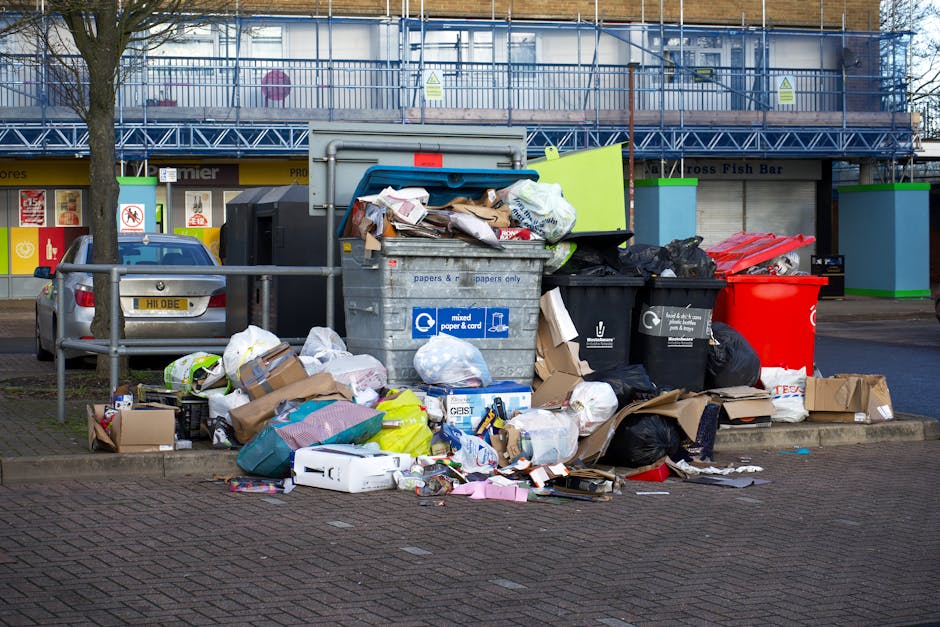
Last minute rubbish removal in Temple avoid delays and fees
If you have rubbish piling up and the clock is ticking, you do not need a lecture. You need a clear plan. Last minute rubbish removal in Temple avoid delays and fees is really about one thing: getting waste collected quickly, safely, and with as little hassle as possible, before small problems turn into expensive ones. Maybe a tenancy is ending, a builder is waiting on site access, or an office move has crept up on you. It happens. The good news is that a fast clearance can still be organised well if you know what to do first, what to avoid, and what to ask before anyone turns up with a van.
This guide walks you through the practical side of urgent rubbish removal in Temple: how it works, where delays usually come from, how fees get added, and what a sensible customer should check before booking. You will also find a checklist, a simple comparison table, and a few real-world examples to make the whole thing easier to handle. No drama, no fluff.
Why Last minute rubbish removal in Temple avoid delays and fees Matters
Urgent rubbish removal sounds simple until the deadline gets close. In Temple, time pressure can show up in all sorts of ways: a flat has to be cleared before check-out, a landlord wants the space back, a small office is being handed over, or builders need access again by morning. When that happens, delays are more than annoying. They can lead to extra labour, missed handover windows, access problems, and sometimes avoidable fees.
The core issue is that last-minute jobs leave less room for error. If the waste is not described properly, if access is awkward, if the load is bigger than expected, or if the team arrives without the right equipment, the job slows down. Then everyone is waiting. And waiting is where costs start creeping in.
There is also a trust angle here. A good rubbish removal service should be transparent about timing, load size, and what can be removed. If you are trying to avoid delays and fees, you need a provider that is upfront rather than vague. That matters even more on busy London days when traffic, parking, and building access can all make a simple collection feel oddly complicated. A half-hour delay can turn into a messy afternoon. That is just the reality.
Key takeaway: the fastest rubbish removal jobs are usually the ones that are prepared properly in advance, even if the booking itself is last minute.
For related services, it can help to look at broader support such as waste removal or, where the job is more specific, options like home clearance and house clearance. If the waste is from a renovation, builders waste clearance may be the better fit.
How Last minute rubbish removal in Temple avoid delays and fees Works
Most urgent collections follow a similar pattern. You make an enquiry, describe the waste, agree a rough scope, and arrange a collection slot. The tricky part is that "rubbish" can mean almost anything to a customer, while to a clearance team it needs to be broken down into practical categories. Mixed household waste, broken furniture, garden cuttings, renovation offcuts, cardboard, and office items can all affect how the job is priced and how quickly it can be completed.
In a last-minute situation, the provider usually needs three things as quickly as possible:
- What needs removing
- How much there is, roughly
- How easy it is to access
That last point is where many delays happen. A basement flat with narrow stairs is not the same as a ground-floor office with loading access. Nor is a garage packed with old furniture the same as a single sofa and a few bags. If the team knows these details early, they can bring the right vehicle, the right number of people, and the right tools. Less guesswork, fewer surprises.
It is also worth saying that "fast" does not always mean "instant." A genuine same-day or next-available booking still needs scheduling, routing, and capacity planning. If you are aiming to avoid extra charges, the smartest approach is to be precise from the start. Leave out the vague bits. Be honest about the volume. Mention stairs, parking restrictions, heavy items, and anything awkward. It saves time later.
Some customers also pair urgent waste clearance with room-specific services. For example, a flooded loft may need loft clearance, while a business handover might need office clearance. A cluttered annex or rental property could call for flat clearance. The right match matters more than the speed claim on the homepage. Truth be told, that is where most people either save money or pay too much.
Key Benefits and Practical Advantages
There are obvious benefits to urgent rubbish clearance, but the practical ones are the real winners. You are not just paying for someone to take stuff away. You are buying time, access, and breathing room.
- Faster handovers: useful when a property, workspace, or storage area needs to be ready quickly.
- Lower risk of extra fees: a well-planned collection is less likely to run long or need a second visit.
- Less disruption: staff, tenants, tradespeople, and neighbours are not waiting around for a messy clearance to finish.
- Better safety: piles of waste can create trip hazards, blocked exits, and awkward lifting risks.
- Cleaner decision-making: once the clutter is out of the way, it is much easier to see what is actually left to deal with.
There is also a psychological benefit, oddly enough. A room full of unwanted furniture or black bags can make everything feel more stressful than it really is. Once the waste is gone, the whole space changes. It feels lighter. Quieter. More manageable. You notice it straight away.
For example, a homeowner in a small Temple flat may be trying to move out before the weekend. They might not care whether the collection is labelled "same-day" or "urgent." They care that the lift is not blocked, the deposit is at risk, and they need the place cleared before evening. In that moment, a reliable collection service is not a luxury; it is the difference between staying on schedule and losing money on a delay.
If the waste includes old items and awkward furniture, it may also be worth checking dedicated options such as furniture clearance or furniture disposal. That keeps the job focused and helps prevent the "we thought that would be included" problem that so often leads to surprise charges.
Who This Is For and When It Makes Sense
Last-minute rubbish removal is useful for more people than you might think. It is not just for emergency clear-outs or panic jobs on a Friday afternoon. In fact, some of the most common callers are people dealing with normal life events that have simply run out of time.
- Tenants moving out who need a flat cleared before inventory or handover.
- Homeowners dealing with overfilled rooms, lofts, garages, or sheds.
- Landlords and letting agents who need a turnaround between occupiers.
- Tradespeople and builders who need waste removed so work can continue.
- Small businesses clearing old stock, furniture, or office clutter before a deadline.
- Families handling a difficult transition where time and energy are both stretched thin.
It can also make sense after a bigger project has overrun. Maybe the garden didn't get done in one go and now the bags are stacked by the fence. Maybe a garage clearance revealed more waste than expected. Maybe you are halfway through sorting the loft and realise you cannot leave the rest there until next week. Let's face it, life does that. It piles up.
The best time to book urgent rubbish removal is the moment you know the delay will cost more than the collection. That might be missed rental income, a delayed move, a blocked work area, or simply the effort of handling it all yourself. If the waste is mostly outdoor material, garden clearance may be more appropriate. If it is a business premises, business waste removal is usually the better route.
Step-by-Step Guidance
If you want to avoid delays and fees, the process starts before the vehicle arrives. A rushed booking can still go smoothly, but only if you handle the prep properly. Here is a simple step-by-step approach that works well in practice.
- List the waste clearly. Write down the main items: bags, furniture, appliances, boxes, rubble, garden waste, or mixed junk. Be specific.
- Estimate the volume. Think in practical terms: one van load, half a room, a garage corner, or several bulky items. If you are unsure, say so.
- Check access. Mention stairs, parking, loading restrictions, lift access, narrow hallways, or anything that slows collection.
- Separate what must stay. Keep personal documents, valuables, and anything reusable or sentimental out of the waste area.
- Ask what is included. Confirm whether labour, loading, disposal, and possible extra charges are covered in the quote.
- Prepare the site. Make the waste easy to reach. Clear a path. Unlock gates if needed. That little bit of prep can save real time.
- Be available when the crew arrives. A quick check-in prevents confusion. It sounds obvious, but you would be surprised how often this is the issue.
- Review the final scope before collection starts. If the pile has grown, say so early rather than halfway through.
A useful habit is to take a couple of photos before booking. Not because you need to overcomplicate things. Just because a few clear images help everyone judge the job more accurately. And if the pile changes overnight, you have a reference point. Handy, really.
If the job is connected to a larger clear-out, you may want to combine it with a broader service such as garage clearance or furniture disposal. That can reduce the need for multiple visits and make pricing easier to understand.
Expert Tips for Better Results
From a practical standpoint, the people who avoid delays usually do three things well: they communicate clearly, they prepare the site, and they do not assume the provider can read their mind. That sounds a bit blunt, but it is true.
Here are a few expert-level habits that make last-minute waste removal much smoother:
- Be honest about awkward items. A wardrobe, mattress, broken desk, or heavy builders' debris changes the work required.
- Flag anything especially heavy or messy. Wet waste, sharp materials, and dusty rubble can affect handling time and safety.
- Group items together where possible. A tidy pile is faster to assess and remove than waste scattered across several rooms.
- Keep the route clear. Hallways, stairs, and doorways should be as open as you can make them.
- Ask about payment and timing upfront. If you are comparing options, check how the booking is confirmed and whether the price is likely to change after arrival. The page on pricing and quotes is a sensible starting point if you want clarity.
Another useful tip: if you think there might be a mix of waste types, say so early. Builders' offcuts, old office chairs, and household clutter do not always move through the same process. Sorting that out before the crew arrives can save a frustrating back-and-forth. Nobody enjoys standing by the van while everyone tries to decide what counts as what. Not ideal.
For waste handling and disposal standards, a company's approach to safety and handling should be clear too. It is reasonable to ask how items will be lifted, loaded, and transported, especially if the job involves stairs or bulky objects. Services that publish their approach to health and safety policy and insurance and safety signals are usually taking those responsibilities seriously.
Common Mistakes to Avoid
Last-minute jobs often go wrong in small, avoidable ways. The good news is that most of them are easy to prevent if you know what to look for.
- Underestimating the amount of waste. A pile that looks "small" in a hallway can be much bigger once moved.
- Forgetting access restrictions. Parking, lifts, permits, and tight entrances all matter.
- Assuming everything is included. Always confirm what the quote covers.
- Leaving sorting until collection day. That is where delays start.
- Not mentioning heavy or awkward items. Surprise items slow things down.
- Booking purely on speed. Fast is good, but reliability matters more if you want to avoid extra charges.
- Leaving no contact person on site. One quick decision can save twenty minutes of confusion.
A small example: a homeowner in Temple books a quick removal for what they describe as "a bit of junk from the spare room." The crew arrives and finds broken furniture, several heavy bags, a mattress, and a box of damp cardboard in the corner. That job is still doable, of course, but it is no longer a simple quick lift-and-go. The quote may need adjusting, or the collection may take longer than expected. Avoidable, really.
The safest approach is to treat the booking like a short briefing, not a guess. A few accurate details now will save time later. Every time.
Tools, Resources and Recommendations
You do not need fancy equipment to prepare for a fast rubbish removal, but a few simple tools help a lot. Keep it basic and practical.
- Phone camera: useful for taking quick photos of the waste and access points.
- Marker pens and labels: helpful if you need to separate keep, donate, and remove piles.
- Heavy-duty sacks or boxes: makes loose waste easier to handle.
- Gloves and sturdy footwear: sensible if you are moving items yourself before collection.
- Measuring tape: handy for large items like wardrobes, desks, or appliances.
As for resources, the most useful ones are often the simplest: a clear written list, a few photos, and an honest description of access. If your waste is linked to a specific space, it can also help to look at the corresponding service pages, such as loft clearance, garage clearance, or office clearance.
If you want to understand how a reputable provider handles the wider process, pages like about us, recycling and sustainability, and insurance and safety can give you a better feel for standards and service approach. That sort of background matters more than people think, especially when time is tight.
Law, Compliance, Standards, or Best Practice
When rubbish is removed in the UK, the practical rule is simple: waste should be handled responsibly, transported properly, and disposed of through lawful channels. You do not need to become an expert in waste law to book a collection, but it is sensible to choose a provider that treats compliance seriously.
For a customer, the main best-practice points are straightforward:
- Do not leave waste in a way that creates hazards for residents, workers, or visitors.
- Make sure hazardous or specialist items are flagged early. Not every clearance team handles every item type in the same way.
- Use a provider that explains its process clearly. Transparency is a good sign.
- Keep records of the booking if needed for tenancy, business, or project administration.
If the clearance is part of a building project, safety standards become even more important. Dust, sharp edges, unstable stacks, and blocked routes can all create unnecessary risk. In those cases, a service with a clear approach to builders waste clearance is worth considering, because the work environment can change very quickly.
It is also sensible to check that the company's payment process is secure and clear. The page on payment and security can help set expectations before you book. A professional service should be able to explain payment, timing, and what happens if the scope changes. No confusion. No hidden drama.
Options, Methods, or Comparison Table
People often think they have only one choice: book a rubbish removal team and hope for the best. In reality, there are a few ways to handle urgent waste, and the right option depends on how much time you have, what kind of waste it is, and how much effort you want to put in.
| Option | Best for | Pros | Watch-outs |
|---|---|---|---|
| Urgent professional clearance | Mixed waste, bulky items, tight deadlines | Fast, convenient, less lifting for you | Needs accurate description to avoid extra charges |
| Self-removal | Small, manageable loads | Can be cheaper if you already have transport | Time-consuming, physically demanding, disposal hassle |
| Partial prep + professional collection | Busy homes, offices, or landlords with limited time | Reduces on-site labour and speeds up the job | Still needs clear communication on what remains |
| Specialist clearance by item type | Furniture, garden, loft, garage, office, or builders' waste | More precise, often more efficient | Must match the service to the waste properly |
In most last-minute situations, a professional clearance is the most reliable option because it reduces the chance of a second trip. But if the load is tiny and the deadline is soft, a more hands-on approach could make sense. It depends. That's the honest answer.
For a more specific job, you may find better value in targeted services like furniture clearance or home clearance. Broad rubbish removal is useful, but focused services can be more efficient when the waste type is obvious.
Case Study or Real-World Example
Here is a realistic example. A small landlord in Temple has a flat to hand over after a tenant moves out earlier than expected. The property contains a few broken chairs, bagged household waste, some loose cardboard, and an old wardrobe that will not fit down the stairwell in one piece. The handover date is close, and the cleaner cannot begin until the space is cleared.
The first attempt to book was too vague. "Just a bit of rubbish" did not help anyone. The second approach was better: the landlord sent photos, mentioned the stairs, and explained that the wardrobe would need dismantling. That small bit of detail changed everything. The team could estimate the job properly, bring the right tools, and complete the collection in one visit.
What prevented delays? Not luck. Preparation.
What avoided extra fees? Accurate description, clear access, and no late surprises about what was actually on site. The job was still last minute, but it was organised, and that is the real difference. A good reminder that speed does not have to mean chaos. Sometimes it just means being calm enough to get the details right first.
Practical Checklist
Use this before you book, or even the morning of collection if the timeline is tight.
- List every main item that needs removing
- Estimate the volume as accurately as you can
- Note stairs, lifts, parking issues, and access restrictions
- Separate anything you want to keep
- Take a few clear photos of the waste area
- Ask what is included in the quote
- Confirm the collection time window
- Make sure the path to the waste is clear
- Flag heavy, sharp, wet, or awkward items
- Have a contact person available when the crew arrives
- Check whether the job is better suited to a specialist service
- Review the provider's terms if the booking is time-sensitive
If you are comparing options quickly, pages like terms and conditions and complaints procedure can also help you understand how the service is structured and how issues are handled if something changes on the day.
Conclusion
Urgent waste clearance does not have to be stressful. The trick is to slow the planning down just enough to let the collection speed up. If you describe the waste clearly, prepare the access, and choose the right type of clearance, you can usually avoid the common delays and the annoying add-on fees that come from poor preparation.
For Temple residents, landlords, tradespeople, and businesses, last-minute rubbish removal is often less about the waste itself and more about the deadline sitting behind it. Once you see it that way, the next step becomes much clearer: be accurate, be prepared, and work with a service that communicates properly. Simple, really. Not always easy, but simple.
If you are dealing with a fast-moving clear-out and want a straightforward process from the start, a professional team can save you time, stress, and a fair bit of faffing about.
Get a free quote today and see how much you can save.
Frequently Asked Questions
What counts as last minute rubbish removal in Temple?
It usually means a collection needed at very short notice, often on the same day or within a tight window before a move-out, handover, or project deadline. The key is urgency, not the size of the load.
How do I avoid delays when booking urgent rubbish removal?
Be precise about what needs removing, how much there is, and how easy it is to access. Photos help a lot. If the team knows the facts early, they can plan the job properly.
What causes extra fees on last-minute clearance jobs?
Common causes include underestimating the volume, failing to mention stairs or access issues, unexpected heavy items, and changes to the job once the crew arrives.
Can I book same-day rubbish removal if I am in a hurry?
Often yes, depending on availability and the size of the job. Same-day work is more likely to succeed when the waste is described clearly and access is straightforward.
Is it cheaper to move the rubbish myself?
Sometimes, but not always. Self-removal can cost less in direct cash terms, yet it may take more time, require transport, and involve disposal hassle. For bulky or mixed waste, professional clearance is often the better value.
What if I only have a few bulky items?
That can still be worth booking, especially if the items are heavy or awkward. A sofa, mattress, wardrobe, or broken desk can be more trouble than a larger but lighter pile of waste.
Do I need to sort the rubbish before collection?
Not always, but basic sorting helps. Keep valuables out, separate anything you want to keep, and flag items that are fragile, sharp, or unusually heavy.
What details should I mention before the crew arrives?
Tell them about stairs, parking, loading access, locked gates, lift access, and any especially awkward items. That information can prevent a lot of waiting around.
Is this service suitable for landlords and letting agents?
Yes, very much so. It is especially useful between tenancies, after a difficult move-out, or when a property needs clearing quickly before inspection or cleaning.
Can rubbish removal help with an office or business move?
Yes. For commercial clear-outs, business waste removal and office clearance are often the most sensible options because they help keep the move organised and reduce disruption.
How do I know if a provider is trustworthy?
Look for clear pricing, sensible communication, safety information, and straightforward terms. A provider that explains its process properly is usually a better bet than one that only talks about speed.
What should I do if the amount of waste changes after I book?
Tell the provider as soon as possible. A small change may be easy to absorb, but a bigger change can affect time, vehicle space, and pricing. Early notice is always better.